What custom packaging actually means
Custom packaging is packaging engineered and printed for one specific product instead of pulled from a stock catalog. It covers folding cartons, custom printed boxes and mailers, food-safe packaging, blister packs and retail-ready displays, each built around what goes inside it.
MPress prints custom packaging in New Orleans. We design, print, die cut and finish folding cartons, printed boxes and mailers, food-safe cartons, blister packs and retail displays at our 35,000 square foot plant at 4100 Howard Avenue, and at MPress West in McKinney, Texas. Because we also warehouse and ship, the same team that prints your box can store it and fulfill orders from it, which removes a handoff most packaging buyers end up managing themselves.
An Ipsos survey for the Paper and Packaging Board found that 72 percent of consumers say packaging design influences what they buy. The box is doing real work, so it is worth specifying properly.
Why packaging spend is growing
The folding carton market keeps expanding
Carton demand is what drives custom packaging volume, and it is forecast to keep climbing.
Sources: Fortune Business Insights; Ipsos for the Paper and Packaging Board (2,002 US adults, 2018).
What we print
These are the packaging formats MPress prints, die cuts and finishes in New Orleans, and the board each one runs on.
| Format | What it is | Board or material | What it suits |
|---|---|---|---|
| Folding carton | Single-layer paperboard, flat shipped and glued, cut and scored to the product. Straight and reverse tuck end, seal end and auto-bottom styles cover most retail work, and each style needs its own die. | Paperboard, specified by caliper and coating, bleached or kraft | Retail shelf packaging |
| Corrugated shipper | A fluted middle layer between two liners, which is what makes the box strong enough to ship. Printed with your brand and sized to the product, so nothing rattles in transit. | Corrugated board, specified by weight and corrugation grade | Shipping the product, often around a carton |
| E-commerce mailer box | A printed mailer die cut to fold and lock without tape. Sizes, board and samples are covered on our custom mailer boxes page. | Corrugated board | Direct-to-customer shipments |
| Retail display | A point-of-sale display that ships flat as a die cut blank and assembles on the sales floor without a build crew. | Paperboard or corrugated board | In-store promotions |
| Food-safe carton and sleeve | Boxes, sleeves and cartons produced to meet food-contact requirements. Tell us what the package will hold, how long it needs to hold it, and whether it will be refrigerated or frozen. | Board and coatings specified to the contents | Bakery, restaurant and packaged food |
| Blister pack | A clear formed shell that displays and protects a product on a peg, backed with a printed card sized to your planogram. | Formed shell on a printed backer card | Pegged retail product |
| Horticultural tag and pot stake | Printed tags and stakes that live outdoors in sprinklers and sun. | Weather-tolerant stock | Nursery and garden center product |
Finishing runs in the same building: die cut windows, foil stamping, embossing, gloss and matte aqueous coatings, spot coating and soft-touch. Our steel rule dies hold a tolerance of about plus or minus 0.005 inch, which is what keeps the cut lined up with the print.
Folding cartons
The classic printed retail box: single-layer paperboard, flat shipped, glued, and cut and scored to your exact product. Because the blank is cut to fit, the finished carton uses less void fill, ships more safely, and sits square on a shelf instead of bowing.
Structure is the first decision and the one that moves a quote most. A straight tuck end, a reverse tuck, an auto-bottom and a locking mailer are different engineering problems, and each needs its own die. After that it is board: caliper, coating, and whether the stock is bleached or kraft all change both the material cost and how the ink sits on it.
Printed boxes, mailers and retail displays
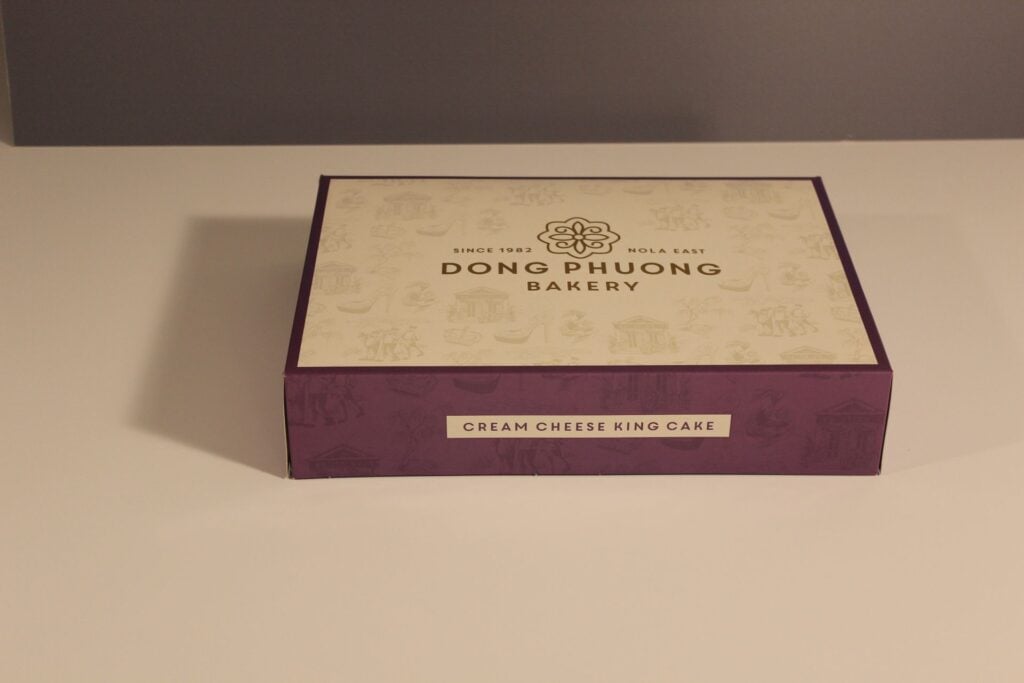
Corrugated shippers and e-commerce mailers printed with your brand and sized to the product, so nothing rattles in transit. A corrugated box has a fluted middle layer between two liners, which is what makes it strong enough to ship. Many products use both: a carton for the shelf and a shipper around it.
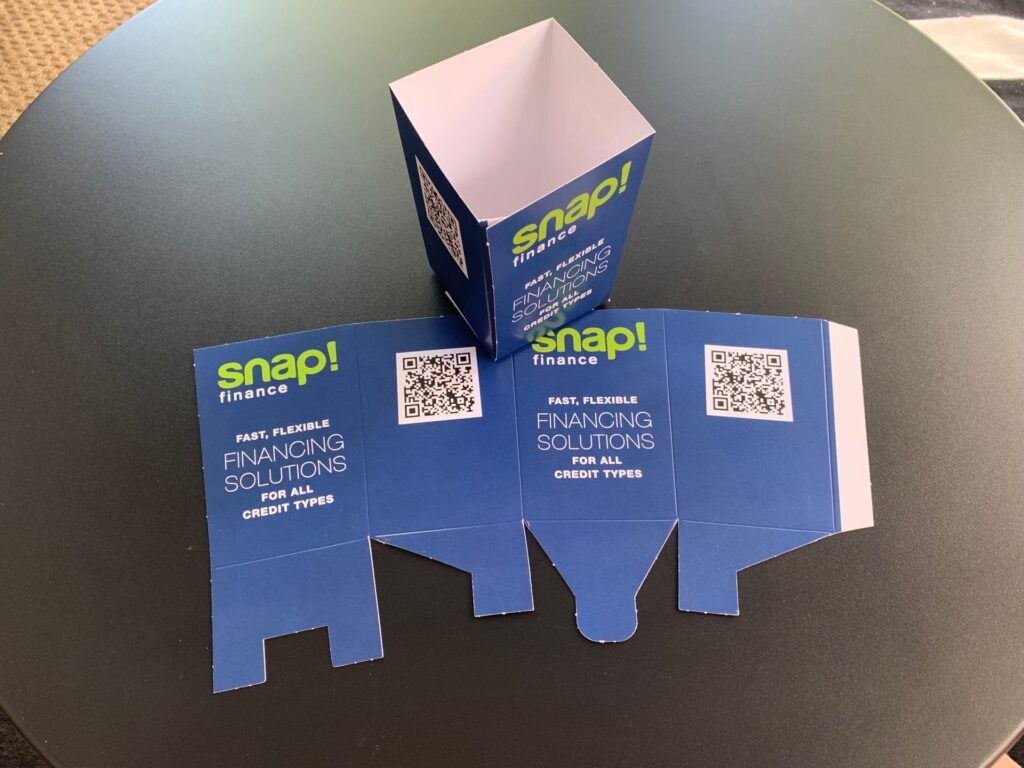
Point-of-sale displays are the same discipline applied to the sales floor. They ship flat as a die cut blank and assemble on site without a build crew, which keeps freight down and means a store associate can set one up in a couple of minutes.
Food-safe packaging and specialty cartons
Boxes, sleeves and cartons produced to meet food-contact requirements, which is a real consideration in a city built on food. Tell us what the package will hold, how long it needs to hold it, and whether it will be refrigerated or frozen, and we will specify board and coatings that suit it.
Specialty finishing is where a carton stops looking like a box. A die cut window turns the pack into a display for what is inside. Foil stamping, embossing and soft-touch or spot coatings add a tactile cue that photographs badly and sells well, which is exactly why premium categories keep using them.
Blister packs, tags and horticultural printing
Clear formed shells that display and protect a product on a peg, backed with a printed card sized to your planogram. We also print horticultural tags and pot stakes on weather-tolerant stock, because they live outdoors in sprinklers and sun.
Send us the product and the quantity you are considering and we will quote it both ways where it is close. Request a quote or call (504) 524-8248.
How much does custom packaging cost?
The price of a custom carton or box is set by five things: the structure, the board stock, the print method, the finishing and the quantity. Quantity is the largest lever, because the die and the press setup are a one-time cost spread across the run, so two boxes of the same size can price very differently once quantity is factored in. The die is a physical tool and can be reused on reorders, which keeps the cost per unit down once it exists.
MPress quotes the exact spec rather than a range. Send the product, the artwork and the quantity you are considering, and we price that run at our New Orleans plant, where the presses, die cutting, finishing and the warehouse are all on one site.
| Cost driver | What it covers | Which way it moves the price |
|---|---|---|
| Structure | The carton style and the die it needs: straight tuck, reverse tuck, seal end, auto-bottom, or a locking mailer with an insert | A straight tuck carton and a locking mailer with an insert are different engineering problems, and the die is different too. |
| Board stock | Caliper, coating, and bleached versus kraft | Heavier and coated stock costs more per unit, and changes how the ink sits on it. |
| Print method | Offset, digital or UV | Digital skips plate setup, so a shorter run costs less to start. Offset lowers the cost per unit as the run grows. |
| Finishing | Foil stamping, embossing, soft-touch and spot coatings, die cut windows | Each finish prices on top of the base print, per unit. |
| Quantity | How many cartons or boxes in the run | The largest lever. The die and the press setup are a one-time cost spread across the run, so the price per unit falls as the quantity rises. |
Price drivers as published on this page and on our custom mailer boxes page. MPress quotes the exact spec rather than a range, so send the product, the quantity and the artwork for a price per unit.
What is the minimum order for custom packaging?
MPress does not publish a fixed minimum for custom packaging, because the workable quantity is set by the print method. Digital printing skips plate setup, which makes a shorter run of cartons practical, and lithographic offset rewards a larger quantity with a lower cost per carton. Tell us the quantity you are considering and we will quote the run that fits.
How long does a custom packaging order take?
Turnaround depends on the job, and the schedule has four parts: prepress and the dieline, your proof approval, the print run, then die cutting, foiling and gluing. Nothing runs until you approve the proof, so part of the calendar is in your hands. Finishing is the stage most schedules underestimate, and on a carton it can take as long as the printing did. Because printing, die cutting and finishing, and the warehouse all sit in our own building in New Orleans, the job never waits on a truck to an outside trade shop. Send your in-hands date with the quote request and we will confirm the schedule before the job starts.
How a packaging job runs
1. Send us the product or the spec. Tell us what goes in the box. If artwork is ready you can upload a file and we will work from that.
2. Structural design and engineering. We design the package around the item, keeping cost under control while protecting what is inside.
3. Proof and approval. You approve before anything runs. Our prepress team catches the problems that would otherwise show up on press.
4. Print, die cut and finish. We print, die cut, foil and glue in house, then finish through bindery and finishing.
5. Warehouse and ship. We hold the run and release it as you need it through fulfillment and warehousing.
Custom packaging for New Orleans and the Gulf South
Our plant is at 4100 Howard Avenue in New Orleans, 35,000 square feet with the presses, die cutting, finishing and the warehouse all on one site. Buying custom packaging in New Orleans from a local plant changes two practical things. You approve a proof before anything runs, and because the plant is here you can review a physical sample in person instead of waiting on a cross-country shipment, which catches structural problems before the full run. And because we warehouse and ship, the finished run is held here and released as you need it, so you order once and pull from stock instead of storing pallets yourself.
We work with brands across Louisiana and the Gulf South on their packaging, and MPress West in McKinney, Texas runs the same packaging work. The boxes go wherever your fulfillment center or storefront needs them, in New Orleans or across the country. If you are ordering e-commerce mailers specifically, our custom mailer boxes page covers sizes, board and samples for that format.