
MPress handles direct mail printing and mailing from one place in New Orleans, from a single drop to an ongoing direct mail marketing program. We build the piece, address it, presort it, and drop it with USPS from our 35,000-square-foot facility on Howard Avenue — self mailers, postcards, envelope packages, and variable-data pieces personalized to each recipient. If you run nonprofit or donor mail, admissions kits, or a repeating retail program, the whole job stays under one roof.
Self Mailers
A self mailer goes out with no envelope, so there is no stuffing, sealing or labeling to pay for. It is folded and tabbed to postal spec, and that spec is what decides the rate the piece qualifies for.
Postcards
Postcards carry strong graphics at low postage. You pick the stock, the size and the finish, and the size is settled before the design is final, because size and thickness decide the postage class.
Political Mailings
Political direct mail goes out two ways: saturated to the USPS carrier routes you choose, or addressed from a voter file you supply. See political direct mail for the classes, the minimums and the timing.
Envelopes
Most mailers leave the outside of the envelope blank. Custom envelope printing puts the offer or the sender there, and addressing is applied in line rather than by label.
What is direct mail printing?
Direct mail printing is producing a piece designed to be mailed, then addressing, presorting, and dropping it with USPS. It covers postcards, self mailers, and envelope packages, and it includes the postal preparation that decides what rate the mailing qualifies for.
At MPress that whole chain happens in one building. The piece is printed, addressed, finished, presorted and entered with USPS from our 35,000 square foot facility on Howard Avenue in New Orleans, so a mailing is not trucked to a lettershop in another state and back before it is entered.
- Print. Offset or digital, depending on quantity and finish, with variable data when the piece changes from one recipient to the next.
- Address. Inkjet addressing runs in line, so pieces are not handled twice.
- Presort. Mail is sorted to earn the postage discount it qualifies for, and the postal documentation is completed here.
- Drop. The mailing is entered with USPS. You approve a proof, and we take it from there.
How a campaign runs
Start with the list or the routes
Addressed mail needs a list. Saturation mail does not, because it targets USPS carrier routes instead, which is what EDDM does. Which one you want changes the design, the postage, and the price, so it is the first decision.
Design to the postal spec, not just to taste
Size, thickness, aspect ratio, and the position of the address block decide what postage class a piece qualifies for. A design that ignores this gets quoted at a higher rate or rejected outright. We set artwork to qualify before it goes on press.
Print, address, and finish
We print the piece, apply addressing, and fold, tab, or insert it as the format requires. Inkjet addressing runs in line, so pieces are not handled twice.
Presort, drop, and track
Mail is presorted to earn the postage discount it qualifies for and dropped with USPS. We handle the paperwork rather than sending you to the counter with a box.
EDDM or a targeted mailing list
There are two ways to address a direct mail printing job. Every Door Direct Mail saturates the USPS carrier routes you choose and needs no mailing list. Addressed USPS Marketing Mail goes only to the names on a list you supply. That one choice sets the postage, the artwork spec, and how much the piece can say to each household.
| EDDM (saturation) | Addressed mail to a list | |
|---|---|---|
| Who it reaches | Every active address on the USPS carrier routes you choose. | Only the named recipients on your list. |
| Mailing list | None. You pick ZIP Codes and the routes inside them. | Required. We print from a list you supply. |
| Personalization | None. Every piece is identical and the address block reads “Postal Customer.” | Names, offers and codes change from one piece to the next in a single pass. |
| Postage | $0.260 a piece, EDDM Retail, flats up to 3.3 oz. | $0.395 a letter at 5-digit automation, $0.467 at mixed automation, on USPS Marketing Mail. |
| Volume rules | 200 pieces minimum and 5,000 maximum per day per ZIP Code, no mailing permit. Above that the mailing runs as EDDM BMEU, which does need a permit. | At least 200 pieces or 50 lb to qualify for Marketing Mail rates. |
| Piece format | Flats. Size and thickness have to qualify, and every bundle carries a facing slip identifying the route. | Letters or flats. Size, thickness and the position of the address block decide the rate. |
| Fits best | One location covering the neighborhoods around it, where the offer is the same for everybody. | Donor, admissions and loyalty mail, where the ask changes by record. |
Postage figures are USPS Notice 123, effective July 12, 2026. Postage is quoted separately from print; our guide to how much direct mail costs carries the full rate table, the minimums and the fees.
Saturation is usually the cheaper way to cover a neighborhood and targeted mail is usually the more productive way to reach a known audience, so the honest answer depends on how well you know who you are mailing. Tell us the footprint you want to cover and the quantity, and we will tell you which lane is cheaper for that job.
Formats we produce
Envelope Packages
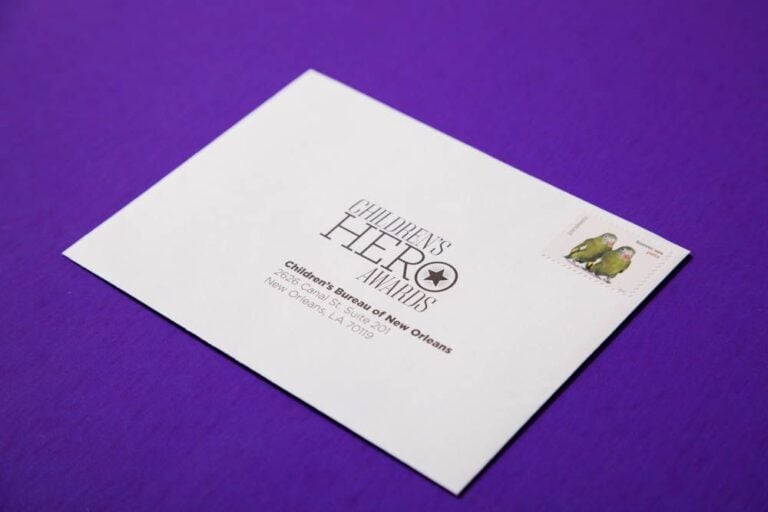
When the piece needs to feel like a letter rather than an ad, or when it has to carry an insert, a brochure and a reply device. An envelope buys you the moment of opening, which is worth a lot for a donor appeal or a high-value offer.
It also costs more to produce and to post, so it earns its place on programs where the response is worth the extra. We will tell you honestly when a self mailer would do the same job for less.
Produced alongside our envelope printing, with addressing applied in line rather than by label.
Personalized and Variable Pieces

Names, offers and codes that change from one piece to the next, printed on our digital presses. Variable data printing is what separates a mail program from a leaflet drop.
Personalization is not just a first name in a headline. It can change the offer, the nearest location, the renewal date, the images, or entire blocks of copy, all from one data file in a single pass.
Clean data is the single biggest predictor of how well this goes. We check for missing fields, inconsistent formatting and duplicates before anything is set up, and we proof the edge cases rather than a tidy sample record.
Self Mailers, Postcards and Invitations
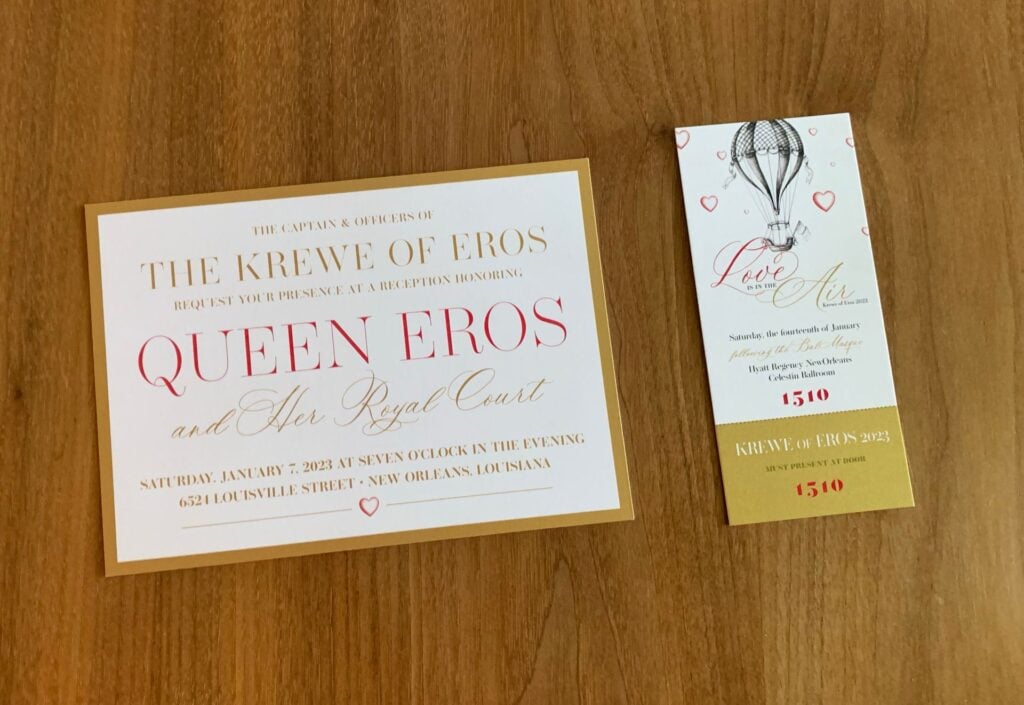
Self mailers need no envelope, so there is no stuffing, sealing or labeling and the fulfillment cost drops accordingly. Folded and tabbed to postal spec, they deliver a lot of printed area for the money.
Postcards are the simplest way to combine strong graphics with low postage, which suits offers, announcements and reminders where the message is short and the deadline matters more than the detail.
Invitations sit at the other end: heavier stock, specialty finishing, and often a matching envelope and reply card. Size and thickness decide the postage class, so we set the format before the design is finalized rather than after.
Programs this suits
Nonprofit and donor mail
Appeals, renewals, and acknowledgments, where the ask changes by donor history. The rates, what qualifying involves and what changes per record are in nonprofit direct mail below.
Admissions and enrollment
Recruitment mail on the enrollment calendar, often assembled as a kit. See our admissions kits guide.
Retail and hospitality
Local offers to defined neighborhoods, usually cheaper as saturation mail than as addressed mail.
Political campaigns
Mail on a ballot date, saturated by carrier route or addressed from a voter file. See political direct mail below.
Ongoing programs
Mail released in waves rather than all at once, held between drops through fulfillment and warehousing.
Political direct mail
Political direct mail is campaign mail printed, addressed, presorted and dropped with USPS as one job. MPress produces it at 4100 Howard Avenue in New Orleans, in the same building that prints the campaign signs and flyers running alongside the mail, so nothing is trucked to a lettershop between print and entry.
There are two ways to cover a district, and the comparison above prices both. Saturation by Every Door Direct Mail reaches every active address on the USPS carrier routes you pick and needs no list, which suits a ward or a set of neighborhoods where the message is the same for everybody. Addressed USPS Marketing Mail goes only to the records on a voter file you supply, which is what lets the piece change from one household to the next.
Timing decides more political mailings than price does. USPS does not guarantee a delivery window for Marketing Mail, and the Domestic Mail Manual allows it deferred handling, so a piece that has to land before a fixed date is either dropped well ahead of that date or sent as presorted First-Class Mail — $0.621 to $0.707 a letter from 500 pieces, against $0.395 to $0.467 on Marketing Mail. Tell us the in-home date you are working back from and we will say which class makes it.
What changes per record. Variable data printing changes names, districts, dates and whole blocks of copy from one piece to the next in a single pass, so one press run can carry several versions of the same mailing. We check the file for missing fields, inconsistent formatting and duplicates before anything is set up.
Postage figures are USPS Notice 123, effective July 12, 2026, and postage is quoted separately from print. Our guide to how much direct mail costs carries the full rate table, and presorted standard mail covers the qualifying rules. Nonprofit rates need USPS nonprofit authorization, so a campaign committee prices at the Marketing Mail rates above unless it holds one.
Nonprofit direct mail
Nonprofit direct mail is appeal, renewal and acknowledgment mail sent at the USPS nonprofit rates, which sit well under the commercial ones: $0.185 a 5-digit automation letter against $0.395, and $0.160 at carrier route saturation against $0.255. Those rates need USPS nonprofit authorization, and qualifying the mailing is part of the job here rather than something we send you to settle at the counter.
A New Orleans nonprofit mails from the building the piece is printed in. The appeal is printed, addressed, presorted and entered with USPS at 4100 Howard Avenue, and if your donor file is concentrated in Orleans and Jefferson parishes the mail is entered close to the people receiving it.
What usually decides how an appeal performs is the file, not the paper. Variable data printing changes the ask amount, the last gift date, the salutation and whole blocks of copy from one piece to the next in a single pass, which is how a lapsed-donor letter and a sustainer letter come off one press run. We proof the edge cases — the record with no first name, the couple with two surnames — rather than a tidy sample record.
Postage figures are USPS Notice 123, effective July 12, 2026. Full rates and minimums are in our guide to how much direct mail costs, and the qualifying rules are in presorted standard mail.
Tell us the quantity, size, stock and deadline and we will quote it. Request a quote or call (504) 524-8248.